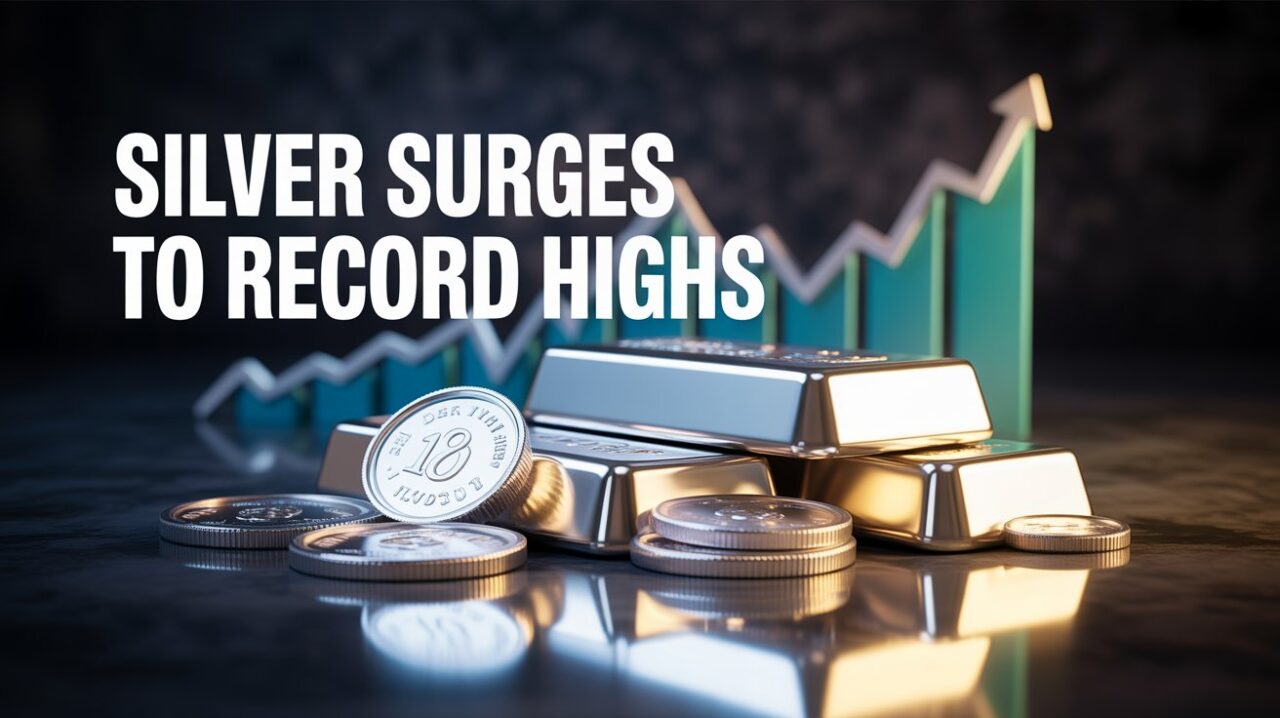
The precious metal has captured global attention with a remarkable 100% gain this year, as supply constraints and industrial demand converge to create unprecedented market conditions
Silver has emerged as the standout performer in the commodities market this year, with prices doubling since January and reaching historic peaks that have sent ripples through the alternative investment landscape. After trending with over 10,000 searches in just 21 hours, the white metal’s extraordinary rally is forcing investors to reconsider their diversification strategies and take a fresh look at tangible assets in an increasingly uncertain economic climate.
Historic Price Surge Captures Market Attention
The silver market achieved a significant milestone this week as prices soared to record highs, marking what many analysts are calling the metal’s most impressive performance since 1979. Spot silver settled at approximately $58 per ounce, representing a staggering increase of more than 100% year-to-date and officially surpassing the previous all-time high set in mid-October.
The recent price action has been nothing short of remarkable. Following a powerful rally that saw silver gain over 12% in a single week, the metal has maintained its upward momentum, driven by a convergence of supply constraints, robust industrial demand, and shifting monetary policy expectations.
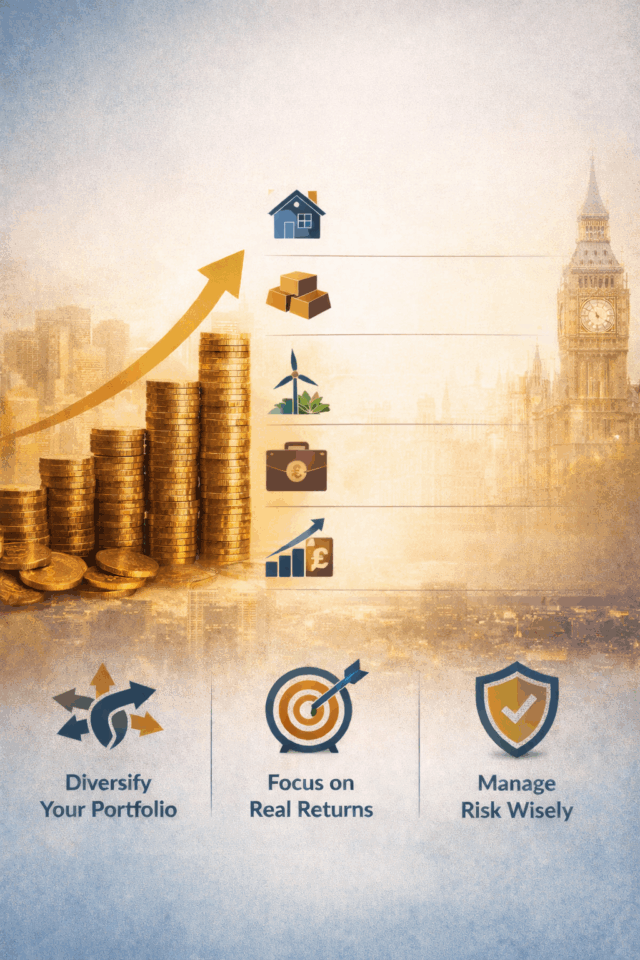
This surge comes at a time when alternative investments are experiencing unprecedented interest from both institutional and retail investors seeking diversification beyond traditional stocks and bonds. With silver’s dual role as both a precious metal and industrial commodity, it offers unique exposure that few other assets can match.
The Supply Deficit Crisis: A Statistical Reality
Perhaps the most compelling factor behind silver’s extraordinary performance is the persistent structural deficit that has plagued the market for five consecutive years. The numbers tell a sobering story about the fundamental imbalance between supply and demand.
“The silver market has run a cumulative deficit of 678 million ounces over the past four years—equivalent to 10 months of global mine production,” according to recent market analysis. This shortage represents approximately 25% of total annual production, creating an unprecedented supply crisis that continues to tighten physical availability worldwide.
The deficit for 2025 alone is projected to reach approximately 149 million ounces, marking the fifth consecutive year of substantial shortfalls. While this represents a slight decrease from previous years, it remains historically significant and demonstrates the persistent nature of current supply-demand imbalances.
Mine production has been unable to keep pace with accelerating demand. Global silver mines are projected to yield approximately 835 million ounces in 2025, representing a decline of over 7% compared to 2016 levels. This long-term decrease in primary silver supply points to persistent challenges within the mining sector, including the maturation of major orebodies, extended timelines for new mine development, and fluctuating operational costs.
Industrial demand hit a record 680.5 million ounces in 2024, and 2025 is on pace to extend that streak, further exacerbating the supply shortage. The industrial sector now accounts for approximately 60% of total global silver consumption, a dramatic shift from historical patterns that underscores the metal’s critical role in modern technology and manufacturing.
Industrial Transformation Drives Unprecedented Demand
Silver’s transformation from primarily an investment metal to a critical industrial commodity has fundamentally altered market dynamics. The metal’s unique properties—particularly its status as the most conductive element on the planet—have made it indispensable across multiple high-growth sectors.
The green energy revolution has emerged as a major demand driver. Solar panel production alone is projected to require over 20% of current annual silver supply by 2027, according to research from the University of New South Wales. By 2050, solar panel manufacturing could consume approximately 85-98% of current global silver reserves, highlighting the metal’s critical role in the transition to renewable energy.
Electric vehicle production represents another significant source of demand. A standard electric vehicle contains approximately 25 grams of silver, with larger EVs requiring up to 50 grams for various components. As global EV adoption accelerates, driven by both consumer demand and government mandates, silver consumption in this sector continues to climb.
The electronics industry, medical applications, and water purification systems all contribute to industrial demand that shows no signs of slowing. Unlike cyclical consumer demand, industrial consumption remains largely recession-proof, particularly in sectors being actively incentivized or funded by governments worldwide.
The London Vault Crisis: A Warning Sign
Perhaps nowhere is the supply shortage more visible than in London’s precious metals vaults. The London Bullion Market Association held 31,023 metric tons of silver in June 2022. By March 2025, volumes had plummeted by approximately one-third to 22,126 metric tons—the lowest point in years.
This dramatic drawdown has had real-world consequences. Some market participants reported having to transport silver by plane rather than cargo ships to meet delivery demand, an extraordinary measure that highlights the severity of the physical shortage. Lease rates—typically hovering around 1-2%—jumped to 7% in 2024, a clear signal of growing physical supply constraints.
The vault depletion was driven by multiple factors, including a surge in Indian demand as investors shifted from record-high gold prices to silver, and tariff concerns that prompted substantial flows of silver into the United States. This created a temporary but severe shortage in the London market, with metal eventually moved from New York back to London to relieve pressure on supplies.
Alternative Investment Renaissance
Silver’s remarkable performance comes amid a broader renaissance in alternative investments, as investors increasingly seek diversification beyond traditional equity and fixed income holdings. The alternatives marketplace has experienced heightened competition and specialization, with asset managers expanding client portfolio allocations to accommodate changing investor needs.
Institutional demand for alternatives has been pivotal to the industry’s growth. Large pensions, endowments, and insurers have steadily increased their allocations to alternatives in pursuit of greater long-term returns and diversification—a trend analysts expect to continue driving future expansion. Meanwhile, new pools of capital from private wealth, high-net-worth advisors, and sovereign wealth funds have emerged as influential forces in the alternatives market.
The appeal of alternative investments lies in their potential to demonstrate low correlations with traditional liquid assets while earning alpha. As a result, these investments can potentially maintain or increase in value when traditional markets decline, reducing portfolio volatility while aiding in further asset diversification. For precious metals like silver, this characteristic has proven particularly valuable during periods of economic uncertainty.
Survey data reveals that 84% of wealth managers are looking to alternative investments to diversify returns or increase return potential as top factors driving their investment decisions. The benefits include returns uncorrelated to traditional equity and fixed income markets, potential for higher yields, downside protection, and greater diversification.
Monetary Policy Tailwinds
The current monetary policy environment has provided additional support for silver’s rally. Market participants have priced in nearly 90% odds of a December interest rate cut by the Federal Reserve, up sharply from earlier expectations. Fed officials have reinforced a dovish narrative, with dovish signals from multiple committee members supporting the case for continued rate reductions.
For a non-yielding asset like silver, lower interest rates improve the fundamental equation by shrinking the opportunity cost of holding metal instead of bonds. This dynamic has historically proven favorable for precious metals, and the current cycle appears to be no exception.
The safe-haven bid has also intensified amid geopolitical tensions, concerns about US trade and foreign policy, record-high equity valuations, and worries about public debt levels. These factors have reinforced interest in portfolio diversification, benefiting both silver and gold investment. The US government’s classification of silver as a “critical raw material” has further strengthened its status as both an investment and strategic asset.
Investment Demand Shows Mixed Signals
While industrial demand remains robust, investment demand for silver has faced conflicting forces in 2025. Physical investment in coins and bars fell 22% in 2024 to a five-year low of 190.9 million ounces, primarily due to weakness across Western markets. The United States saw silver investment demand decline by 46%, driven by profit-taking at higher prices, market saturation, and optimism about economic policies.
However, the tide appears to be turning. Silver-backed exchange-traded funds added approximately 200 tons recently, lifting total holdings to the highest level since 2022 amid robust demand. India has emerged as a bright spot, with investment demand growing 21% driven by bullish price expectations and favorable import duty adjustments.
The recent price surge has rekindled investor interest, with inflows into silver ETFs reaching their highest levels since 2020. As one market strategist noted, the metal’s steady climb is turning into a breakout, with supply thinning and investors taking notice.
Volatility: The Double-Edged Sword
Silver’s nickname as the “Devil’s metal” stems from its notorious volatility, a characteristic that has been on full display throughout 2025. The metal experienced a 15% correction in October, dropping from record highs to $45.51 before resuming its upward trajectory. This whipsaw action serves as a reminder that silver’s price movements can be dramatic and sudden.
The silver-to-gold ratio—which measures how many ounces of silver are needed to buy one ounce of gold—provides insight into relative valuation. With gold recently trading above $4,000 per ounce, some analysts suggest silver remains undervalued compared to its historical relationship with gold. The ratio has ranged from 31:1 to 124:1 in recent decades, with the midpoint around 78:1. A return to lower historical ratios could imply significant additional upside for silver prices.
However, this volatility cuts both ways. While it creates opportunities for substantial gains, it also introduces significant risk that may not be suitable for all investors. Market participants must be prepared for sharp pullbacks even within a broader bull market trend.
Recycling Challenges and Structural Constraints
One factor that might typically alleviate supply shortages—recycling—has proven insufficient to close the deficit gap. While silver recycling rose 6% in 2024 to a 12-year high of 193.9 million ounces, this increase cannot offset declining mine production and surging demand.
The challenge lies in silver’s widespread but diffuse application in modern products. Approximately 75% of silver supply comes as a byproduct from copper, lead, zinc, and gold mining operations. This production structure means that even with higher silver prices, supply cannot quickly respond, since the economics of the primary metal drive production decisions.
Furthermore, the concentration of silver in many electronic products is so minimal that recovery costs often exceed the value of the metal itself, limiting recycling’s ability to significantly address supply deficits. This structural rigidity perpetuates the supply-demand imbalance and suggests that market tightness may persist for the foreseeable future.
The Inflation-Adjusted Perspective
While silver has reached new nominal record highs, the inflation-adjusted picture provides important context. The 1980 peak of approximately $50 per ounce would equate to roughly $150-200 in today’s dollars when adjusted for inflation. This suggests that despite the impressive rally, silver remains well below its historical real value peak.
This inflation-adjusted perspective offers both a sobering reality check and a potentially bullish long-term outlook. If historical real price levels provide any guidance, silver could have substantial room for appreciation before reaching genuinely extreme valuations. However, past performance is never a guarantee of future results, and market conditions today differ significantly from those of previous commodity super-cycles.
Strategic Considerations for Investors
The silver market’s transformation presents both opportunities and challenges for investors considering exposure to this alternative asset. The metal’s dual role as both an industrial commodity and investment vehicle creates unique dynamics that require careful analysis.
For investors seeking portfolio diversification, silver offers several potential benefits. Its low correlation with traditional equity and fixed income markets may provide valuable diversification characteristics. The metal’s tangible nature appeals to those concerned about currency devaluation or systemic financial risks. And the current supply-demand fundamentals suggest potential for continued price appreciation.
However, prospective investors must also weigh significant considerations. Silver’s volatility can lead to dramatic short-term price swings that may test even disciplined long-term holders. The market’s relatively small size compared to gold or major commodity markets can amplify price movements in both directions. And industrial demand linkages mean silver prices can be influenced by economic growth prospects in ways that pure precious metals are not.
Investment vehicles for silver exposure include physical bullion in the form of coins or bars, exchange-traded funds backed by physical silver, mining company equities, and futures or options contracts. Each approach carries distinct risk-return characteristics, liquidity profiles, and tax implications that should be carefully evaluated based on individual circumstances and objectives.
Looking Ahead: Structural or Speculative?
As silver prices hover near record highs, the critical question facing investors is whether this rally represents a sustainable structural shift or a speculative bubble destined for correction. The evidence suggests elements of both.
On the structural side, the arguments are compelling. The cumulative supply deficit approaching 800 million ounces over five years represents a fundamental imbalance that cannot be quickly resolved. Industrial demand drivers—particularly in green energy and electrification—appear durable and are being actively supported by government policies worldwide. Mine supply constraints reflect long-term challenges in the extractive sector that typically take years or decades to address through new project development.
On the speculative side, the rapid 100% price gain in a single year raises questions about sustainability. Some market observers note that momentum-driven buying and short-covering have amplified the move beyond what physical fundamentals alone might justify. The 14-day relative strength index recently tipped above 70, often considered an indication that momentum may be overheated.
Most market analysts expect continued volatility with potential for both additional upside and sharp corrections. The consensus view appears to be that structural factors support higher long-term prices, but the path forward will likely be characterized by significant fluctuations rather than steady appreciation.
The Broader Alternative Investment Context
Silver’s performance exemplifies broader trends reshaping the alternative investment landscape in 2025. Investors are increasingly recognizing that publicly-traded stocks and bonds alone may not yield the diversification and returns they seek, prompting expanded consideration of alternative assets ranging from private equity and real estate to commodities and infrastructure.
The democratization of alternative investments continues to accelerate, with technological platforms and evolving fund structures making previously institutional-only strategies accessible to a broader investor base. Fractional ownership models now allow participation in assets that were once reserved for ultra-high-net-worth individuals or institutions.
Macroeconomic trends supporting alternatives include persistent inflation concerns, geopolitical uncertainty, elevated valuations in traditional markets, and the search for yield in a complex interest rate environment. These conditions have driven record inflows into alternative strategies, with the trend showing no signs of abating.
For precious metals specifically, the combination of monetary policy uncertainty, safe-haven demand, and industrial applications creates a multifaceted investment case that resonates across different investor types and objectives. Silver’s performance has reinvigorated interest in tangible assets more broadly, with platinum and other metals also posting strong gains.
Conclusion: A New Chapter for Alternative Assets
Silver’s record-breaking rally represents more than just another commodity price spike. It signals a fundamental reassessment of the role alternative investments can play in portfolio construction and risk management. The metal’s transformation from primarily an investment vehicle to a critical industrial commodity has created new dynamics that challenge traditional valuation frameworks.
The confluence of persistent supply deficits, accelerating industrial demand from green energy and technology sectors, supportive monetary policy, and renewed investment interest has created conditions that many market participants believe can support elevated price levels. Whether silver continues its march higher or experiences significant pullbacks, the metal’s prominence in alternative investment discussions appears assured.
For investors navigating an increasingly complex financial landscape, silver offers a case study in the opportunities and risks inherent in alternative assets. Its tangible nature, industrial applications, and monetary heritage create a unique profile that can serve specific portfolio roles. However, its volatility and market dynamics require careful consideration and appropriate position sizing.
As alternative investments continue their expansion beyond traditional institutional portfolios into mainstream wealth management, assets like silver demonstrate both the potential and the complexity of this evolving landscape. The metal’s extraordinary 2025 performance has certainly captured attention—the critical question for investors is whether it deserves a permanent place in their diversified portfolios.
With supply-demand fundamentals unlikely to resolve quickly and industrial applications continuing to expand, silver appears positioned to remain a focal point of alternative investment discussions well into 2026 and beyond. Whether viewed as a hedge against uncertainty, an industrial commodity play, or a portfolio diversifier, silver’s record-breaking year has firmly established its relevance in modern investment strategy.