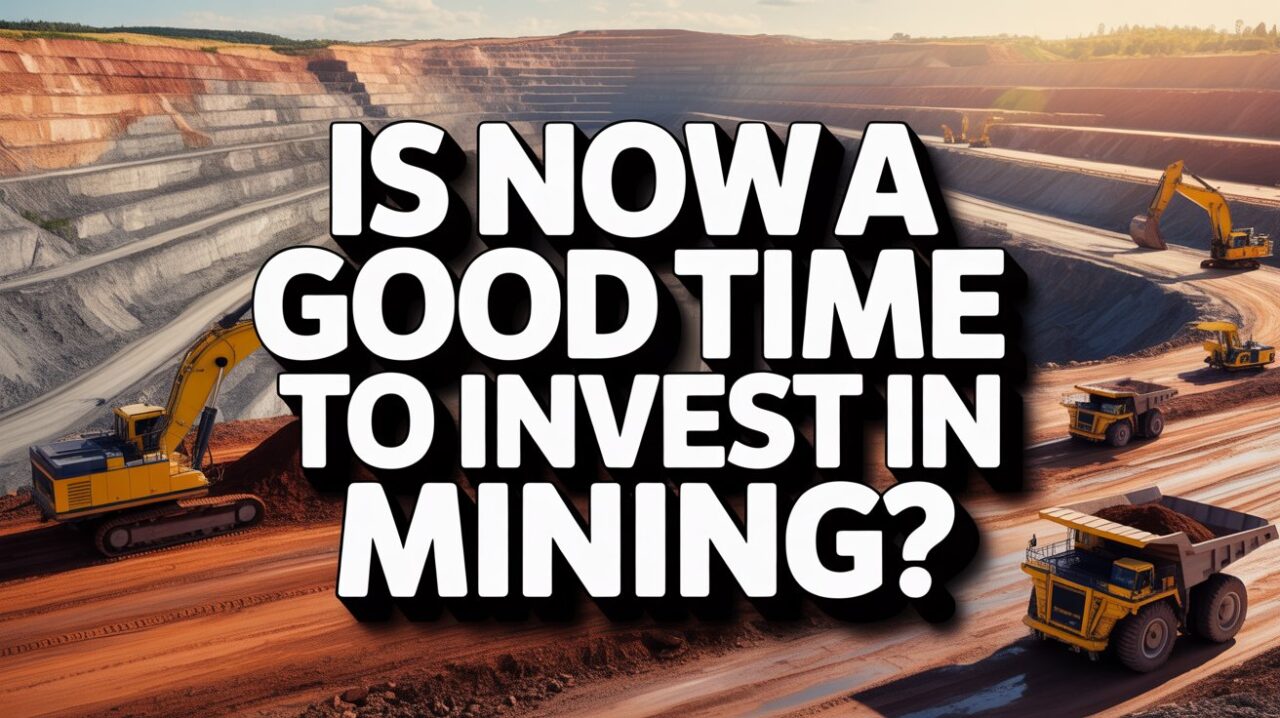
The mining sector has always been a cornerstone of global economic activity, providing essential raw materials for everything from construction to technology. But as we move through 2025, many British investors are asking a crucial question: is now the right time to commit capital to mining investments?
The answer, as with most investment decisions, isn’t straightforward. It depends on various factors including commodity prices, geopolitical stability, technological innovation, and broader economic trends. Let’s examine the current landscape.
The Case for Mining Investment in 2025
Global demand for minerals continues to surge. The transition to renewable energy has created unprecedented appetite for copper, lithium, cobalt, and rare earth elements. Electric vehicles alone require several times more copper than traditional combustion engine cars. Wind turbines, solar panels, and battery storage systems all demand substantial mineral inputs.
Supply constraints are equally significant. Many existing mines are ageing. New projects face lengthy approval processes, often taking a decade or more from discovery to production. This supply-demand imbalance has historically driven commodity prices higher, benefiting mining companies and their shareholders.
Inflation concerns also play a role. Mining stocks and physical commodities have traditionally served as inflation hedges. When paper currencies lose purchasing power, tangible assets like gold, silver, and industrial metals often retain or increase their value.
According to Rachel Buscall, CEO of New Capital Link, “The mining sector presents compelling opportunities for patient investors who understand the cyclical nature of commodities. We’re seeing structural changes in supply chains that favour companies with established production capabilities and strong balance sheets.”
Her observation highlights an important point. Not all mining investments are created equal.
Distinguishing Between Mining Investment Types
Investors can access the mining sector through several routes. Each carries different risk profiles and potential returns.
Direct equity investment involves buying shares in mining companies. This could mean investing in major producers like Rio Tinto or BHP, which offer relative stability and dividend income. Alternatively, investors might choose junior miners and exploration companies, which carry higher risk but potentially explosive returns if they make significant discoveries.
Exchange-traded funds provide diversified exposure across multiple mining companies or specific commodities. These funds reduce single-company risk whilst maintaining sector exposure.
Physical commodities represent another option. Gold bullion or coins offer direct commodity ownership without counterparty risk. However, storage costs and insurance can erode returns over time.
Streaming and royalty companies provide capital to miners in exchange for rights to purchase future production at predetermined prices, or receive royalty payments. These companies often enjoy higher margins and lower operational risk than traditional miners.
Current Market Dynamics
The mining sector enters 2025 facing both headwinds and tailwinds.
Copper prices have strengthened considerably. The red metal benefits from electrification trends and constrained supply. Chile and Peru, which together produce roughly 40% of global copper, face ageing mines and political uncertainty. These factors support higher prices.
Gold maintains its appeal during periods of geopolitical tension and currency volatility. Central banks worldwide have been net buyers of gold for over a decade, providing fundamental support for prices.
Lithium markets tell a more complex story. Prices surged dramatically in 2021 and 2022 before correcting sharply in 2023. Oversupply from new Australian and South American projects, combined with slower-than-expected EV adoption in some markets, created pressure. However, long-term demand forecasts remain robust as battery technology advances and energy storage requirements grow.
Iron ore and coal markets face uncertainty. Chinese economic growth, the primary driver of demand for these bulk commodities, has slowed. Environmental policies increasingly favour cleaner alternatives to thermal coal, though metallurgical coal for steelmaking retains importance.
Rachel Buscall notes that “savvy investors are looking beyond short-term price fluctuations to identify companies with quality assets, manageable debt levels, and experienced management teams capable of navigating commodity cycles.”
This perspective emphasises the importance of fundamental analysis over market timing.
Geopolitical Considerations
Mining investments cannot be separated from geopolitical realities. Resource nationalism has increased in recent years, with countries seeking greater control over their mineral wealth.
The Democratic Republic of Congo, which produces approximately 70% of the world’s cobalt, has raised royalties and imposed stricter regulations. Indonesia banned nickel ore exports to encourage domestic processing. These moves can disrupt supply chains and affect company profitability.
Conversely, Western governments increasingly view mining as strategically important. The United States, European Union, and United Kingdom have all announced initiatives to secure critical mineral supplies and reduce dependence on geopolitically sensitive regions. This policy support could benefit miners operating in stable jurisdictions.
Environmental and Social Governance
ESG considerations have moved from peripheral concern to central investment criterion. Mining companies face intense scrutiny over their environmental impact, water usage, carbon emissions, and relationships with local communities.
Investors increasingly favour companies demonstrating genuine commitment to sustainable practices. This isn’t merely about ethics. Poor ESG performance creates regulatory, reputational, and operational risks that can destroy shareholder value.
Companies investing in cleaner technologies, mine rehabilitation, and stakeholder engagement often command valuation premiums. This trend seems likely to intensify rather than diminish.
Risks to Consider
Mining investment carries substantial risks that warrant careful consideration.
Commodity price volatility can be extreme. Prices respond to global economic conditions, currency movements, weather events, and countless other factors. A diversified approach helps mitigate single-commodity exposure.
Operational challenges plague even the best-managed companies. Geological surprises, equipment failures, labour disputes, and permitting delays can derail projects and crush share prices.
Capital intensity means mining companies require substantial funding for development and expansion. This can dilute existing shareholders or burden balance sheets with debt during downturns.
Political risk ranges from taxation changes to outright nationalisation. Thorough due diligence on jurisdictional risk is essential.
Long development timelines mean investors might wait years before new projects generate returns. Patience is not merely advisable but necessary.
Strategic Approach for UK Investors
British investors should consider several factors when approaching mining investments.
Portfolio allocation matters enormously. Most financial advisers suggest limiting exposure to any single sector, including mining, to a reasonable percentage of total holdings. The appropriate level depends on individual risk tolerance and investment objectives.
Currency considerations affect returns for UK-based investors. Most commodities price in US dollars. Sterling weakness against the dollar can enhance returns from mining investments priced in dollars, whilst sterling strength can dampen them.
Tax efficiency should influence investment structure. ISAs and SIPPs offer tax advantages for eligible mining equities. Investors should understand capital gains tax implications and dividend taxation before committing capital.
Research and due diligence cannot be outsourced entirely. Understanding what a company mines, where it operates, who manages it, and how it finances operations provides essential context for investment decisions.
The Verdict
Is now a good time to invest in mining? For long-term investors with appropriate risk tolerance, the sector offers genuine opportunities. The energy transition, infrastructure development, and technology advancement all require substantial mineral inputs. Supply constraints support this demand growth.
However, timing perfection is impossible. Commodity cycles can be brutal. Share prices can fall 50% or more during downturns, even for quality companies.
The strongest approach combines patience, diversification, and focus on quality. Investors should favour companies with established production, strong balance sheets, competent management, and operations in stable jurisdictions. Building positions gradually rather than committing capital all at once reduces timing risk.
For those willing to accept volatility in exchange for potential long-term returns, mining investments deserve serious consideration as part of a balanced portfolio. The sector isn’t suitable for everyone, but for those who understand the risks and opportunities, 2025 presents an intriguing entry point into an industry fundamental to modern civilisation.
The question isn’t whether mining will remain important. The question is which companies will thrive in the decades ahead, and whether current valuations offer attractive risk-adjusted returns. Answering that requires research, discipline, and realistic expectations about both the potential rewards and the inevitable challenges that lie ahead.